
Demand Side Management (DSM), also known in German as “Nachfrage-” or “Laststeuerung,” describes the targeted adjustment of electricity consumption to the current situation in the energy system. Rather than simply adjusting electricity generation and the power grid to consumption, consumption itself becomes a controllable factor. With increasing feed-in from wind and solar power plants, as well as the growing electrification of industry and mobility, demand-side management is gaining importance as a tool for system stabilization and cost optimization.
Table of contents
ToggleDefinition of terms
Demand-side management refers to all measures used to shift the timing of electricity consumption, reduce it , or increase it in a targeted manner in order to better align generation with consumption. In contrast to the traditional supply model, in which generation is based on consumption, DSM adjusts consumption to the amount of energy that is available or needed.
Background and Objectives of Demand-Side Management
The electricity system is undergoing increasing change due to:
- the expansion of weather-dependent renewable energy sources such as wind and solar power
- Increasing electrification of manufacturing, heating, and transportation
- the growing need for short-term flexibility
Demand-side management is intended to:
- Balancing Generation Peaks and Troughs
- Relieve Pressure on Power Grids and Prevent Grid Congestion
- Reducing Costs for Businesses
- facilitate the integration of renewable energy
It thus complements both market-based instruments, such as trading on flexibility markets, and grid-based measures, such as congestion management in the power grid.
Forms of Demand-Side Management
DSM can be divided into three basic categories:
- Load shifting: Consumption is shifted to times when rates are lower or when the grid is less congested, without changing the total amount
- Load shedding: Consumption is reduced on short notice, for example, during grid congestion or when electricity prices are high
- Load ramp-up: Demand is intentionally increased to absorb excess generation
All three methods can be performed manually, automatically, or algorithmically.
How It Works
For DSM to be used effectively, the following steps are typically necessary:
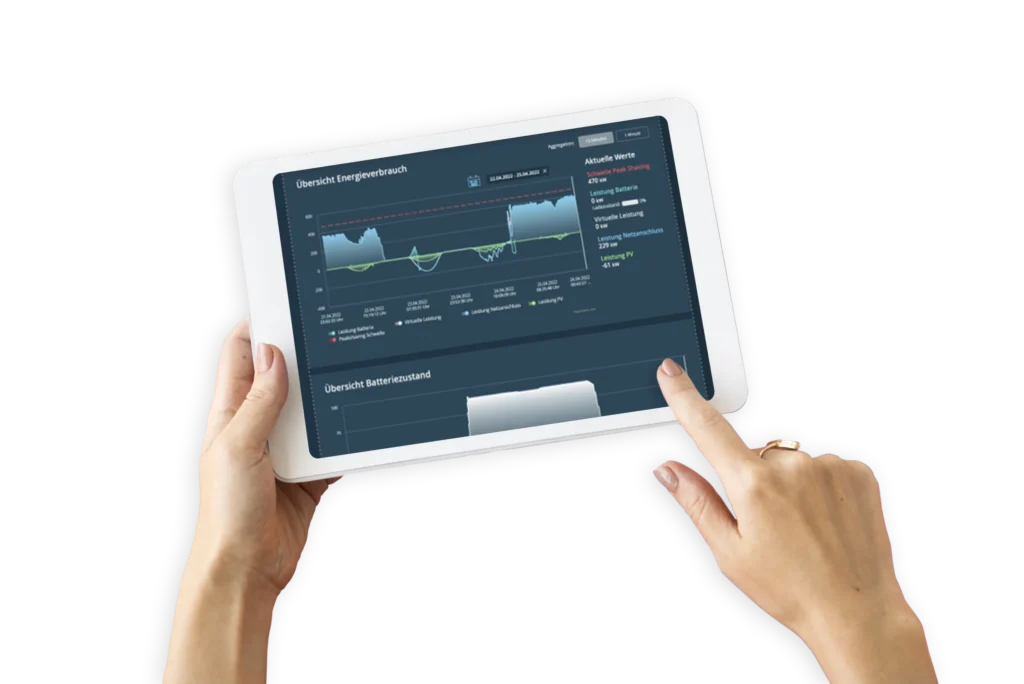
- Tracking Taxable Consumption Processes
- Assessment of Flexibility Potential by Time, Quantity, and Duration
- Automated or manual activation as needed
- Reporting and Billing for the Flexibility Provided
Depending on the objective, DSM is used either for internal purposes—such as optimizing electricity costs—or for market-related purposes—such as participating in flexibility markets.
Requirements for Businesses
To successfully implement DSM, companies generally need:
- controllable or adjustable consumption processes
- a reliable database of load profiles
- Digital control technology for automated implementation
- clear economic or contractual conditions
Relevance for companies
DSM is particularly relevant for:
- Energy-intensive companies with controllable processes
- Operators of cooling, heating, and production facilities with buffer capacity
- Companies with battery storage systems or their own power generation
- Businesses that want to actively reduce grid fees and procurement costs
Connection to Energy Storage and Digitalization
Energy storage systems significantly expand the possibilities of DSM by decoupling consumption and generation over time without having to adjust production processes themselves. In combination with digital systems such as energy management systems (EMS) and (decentralized grid control), flexibility can be utilized automatically and in the most economically optimal way.
Distinction from related terms
Not to be confused with:
- (Load shifting via storage): a specific technical implementation of DSM using battery storage rather than through direct adjustments to production or consumption processes
- Peak Shaving: a specific DSM measure focused on reducing individual load peaks, not the entire DSM concept
- (Flexibility markets): the marketplace where DSM flexibility can be traded—not to be confused with DSM as a concept in itself
- Control power: short-term technical compensation for frequency deviations on a scale of seconds to minutes
Summary
Demand-Side Management turns electricity consumption itself into a controllable factor in the energy system. Through load shifting, load shedding, or load ramping, companies can actively contribute to grid stability while simultaneously reducing costs or generating additional revenue. In combination with energy storage systems and digital control systems, DSM is increasingly becoming a strategic component for the economic viability and future security of companies within the energy system.