
In the energy sector, “peak shaving ” refers to the strategy of reduce peak loads among industrial and commercial electricity consumers. These load peaks, also known as“peaks,” are important for both grid stability and electricity procurement costs.
Table of contents
TogglePeak load controllers operate at 15-minute intervals
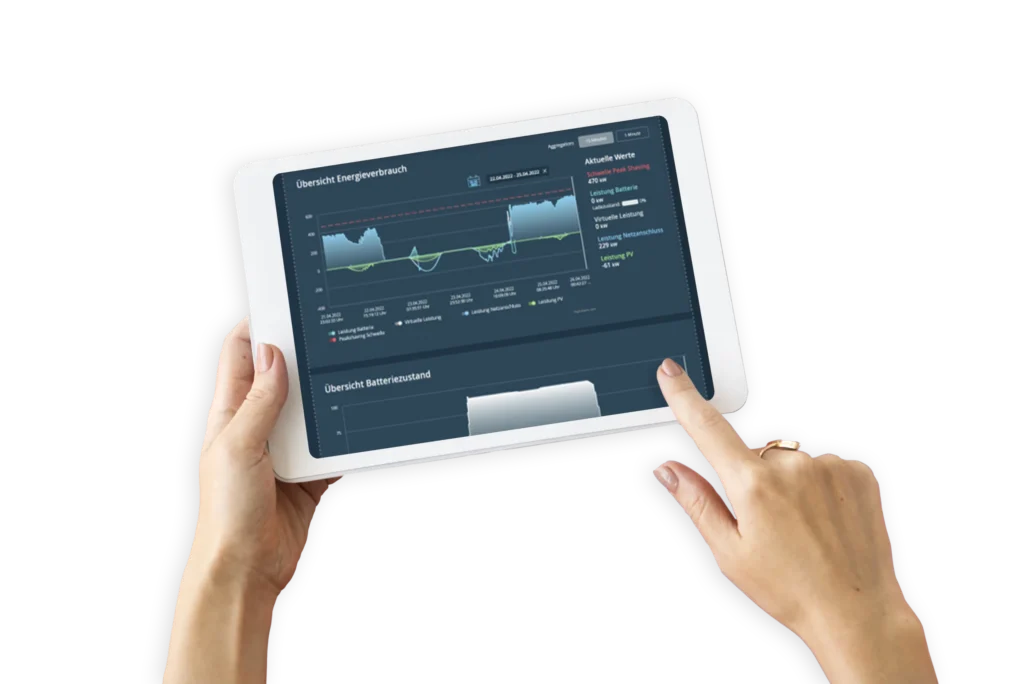
Peak shaving is achieved when consumers quickly and temporarily reduce their electricity consumption to avoid peak loads. This is done either by curtailing production or by using on-site generation systems and battery storage systems. Load reduction is often managed by so-called “peak load controllers,” which monitor power consumption every quarter-hour and intervene during peak load periods.
Real-time reduction instead of time-shifting
Unlike load shifting, which involves increasing electricity consumption at a later time to take advantage of lower prices or reduced grid load, peak shaving focuses on controlling loads and battery systems in real time. In this process, electricity consumption is reduced immediately to prevent impending load peaks.
Grid costs, volatile feed-in, and production peaks
High grid costs mean that companies often have to contend with rising fees for using the power grid. Fluctuations in the power supply caused by the integration of renewable energy sources can lead to irregular load profiles. Industrial processes, due to their production workflows, cause fluctuating loads that can result in peak loads.
Up to 80% lower grid usage fees
Cost savings: By avoiding peak loads, companies can achieve significant savings on grid usage fees—targeted measures can result in savings of up to 80% on grid usage fees.
Grid Stability: Peak shaving helps prevent overloads in the power grid.
Environmental Impact: Using electricity more efficiently can reduce CO₂ emissions.
Storage, Demand-Side Management, and Load Management
- Energy storage solutions: The use of battery storage systems can help to balance peak loads by storing energy during times of low demand and using it during peak load times.
- Demand-Side Management: This concept encompasses various approaches to managing electricity consumption during peak load periods.
- Load Management Systems: These systems enable companies to monitor and control their energy consumption in real time.
Cost savings compared to investment costs
Advantages: significant cost reductions, particularly in grid access fees, as well as flexible grid usage that facilitates the integration of renewable energy.
Disadvantages: high initial investment costs for energy storage and modern load management systems, as well as the risk of temporary power shortages if control systems are not properly managed during peak load periods.
Conclusion: Well-Thought-Out Management as a Key to Success
Peak shaving is an effective method for reducing peak electricity demand, offering businesses numerous benefits, including significant cost savings. Well-planned management and the use of modern technologies are crucial for ensuring grid stability and increasing efficiency.
Frequently Asked Questions (FAQ)
What is peak shaving?
Peak shaving refers to the targeted reduction of peak electricity demand in order to lower capacity-based grid fees.
How much can be saved through peak shaving?
Depending on the load profile and implementation, savings of up to 80% on grid usage fees are possible.
What is the difference between peak shaving and load shifting?
Peak shaving reduces consumption in real time to avoid acute load peaks; load shifting shifts consumption to times when rates are lower.