
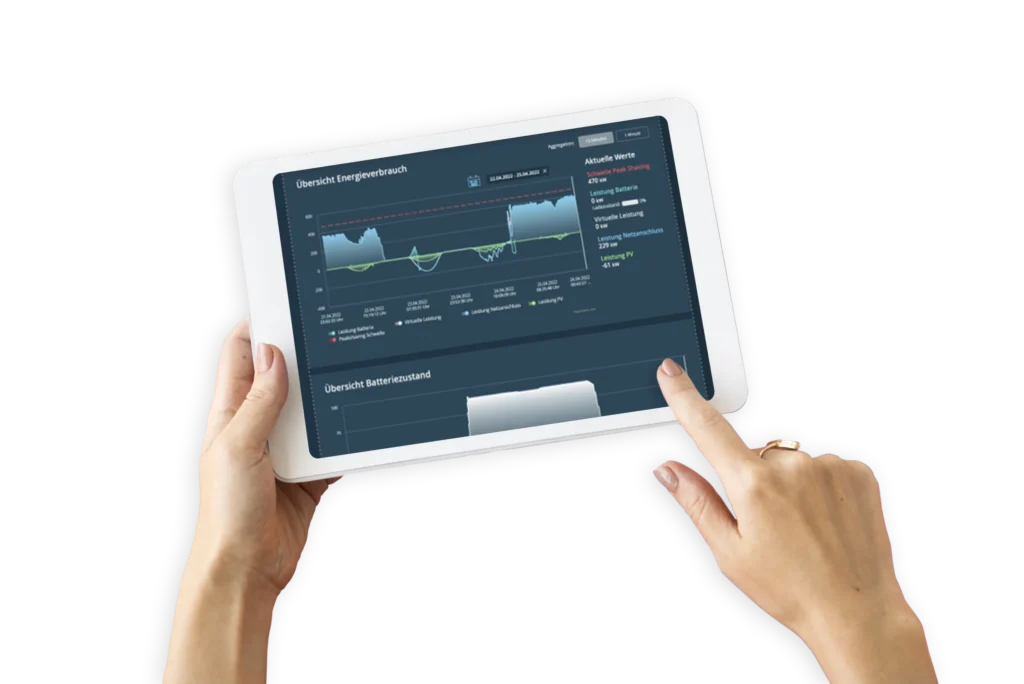

The tertiary control power (TRL), also known as minute reserve, is an essential component of the electricity market and is used to compensate for longer-term grid fluctuations. It is activated when electricity generation and consumption drift apart over a longer period (usually more than 15 minutes). TRL offers a stabilizing function in the energy market, as it helps to maintain a secure power supply even in the event of unexpected changes in the grid frequency.
Table of contents
ToggleApplication and functioning of tertiary control
The tertiary control (TRL) is used when the power grid becomes unbalanced over a longer period of time. The deviation of the grid frequency from 50 Hertz serves as an indicator of whether there is too much or too little electricity in the grid. TRL is activated to correct these deviations and bring the grid back into the stable range. In contrast to faster types of control energy, such as primary control power (PRL) or secondary control power (SRL), TRL does not have to be fully available until after 15 minutes. This makes it possible to include a large number of plants in the provision, including biogas plants, hydropower plants and CHP plants.
Providers and provision of TRL
The provision of tertiary control power is increasingly carried out by flexible energy producers. In addition to conventional power plants, such as gas-fired power plants and pumped storage power plants, smaller decentralized plants and electricity storage systems can also provide TRL. This flexibility is particularly interesting for plants that have a certain response time for short-term electricity generation or consumption control. Electricity consumers can also provide negative TRL by adjusting their consumption behavior and thus absorb excess electricity from the grid.
Participation in the TRL market requires a pre-qualification of the plant, which ensures that the power is available within 15 minutes and can be provided reliably. Smaller plants are often unable to guarantee this on their own, which is why they join together in virtual power plants in order to provide a sufficient amount of balancing energy as a group.
Marketplaces and tenders
The trading of tertiary control power takes place via auctions, which usually take place weekly. Providers of TRL must specify both a capacity price and a work price for the provision and activation of the control energy in advance. The bids of the providers are sorted by price in a so-called merit order list. The grid operator then gradually selects the cheapest providers until the entire demand for control energy is covered. Similar to other forms of control energy, billing is carried out using the pay-as-bid procedure, in which the provider receives exactly the price that he specified in his offer.
Pricing: Capacity and work price
The remuneration for tertiary control power consists of a capacity price and a work price. The capacity price is paid for the fact that the capacity for the provision of TRL is maintained, regardless of whether the power is actually called upon. The work price, on the other hand, is due when the plant actually feeds control energy into the grid. This distinction makes tertiary control flexible and enables targeted control of costs depending on actual energy requirements.
Comparison with other forms of control energy
The tertiary control power (TRL) differs significantly from other forms of control energy, such as the primary control power (PRL) and the secondary control power (SRL). The biggest difference lies in the response time and the provision period:
- Primary control power (PRL): Is activated within seconds and serves to immediately compensate for frequency deviations in the grid.
- Secondary control power (SRL): Reacts within minutes and stabilizes the grid in the event of short-term imbalances.
Advantages and possible uses of TRL
Due to the longer provision time, a wide range of energy sources such as biogas plants, hydropower plants and CHP plants can participate in the TRL. Despite the lower revenues compared to PRL and SRL, TRL providers benefit from less demanding technical requirements and more flexible integration into the control energy market, which for many providers is a useful addition to the marketing of control energy.
Summary
The tertiary control power plays a crucial role in the energy market, especially in the event of longer-term imbalances between electricity generation and consumption. With a wide range of technical options and flexible provision requirements, TRL is an attractive option for many energy producers and consumers. The participation in the TRL market can be optimized through the combination of renewable energies, battery storage systems and intelligent control systems.
Note: Please note that the Wiki entry tertiary control power (TRL) is for information purposes only and does not replace legal advice. be.storaged GmbH assumes no guarantee for the completeness, accuracy and timeliness of the information in this entry.