
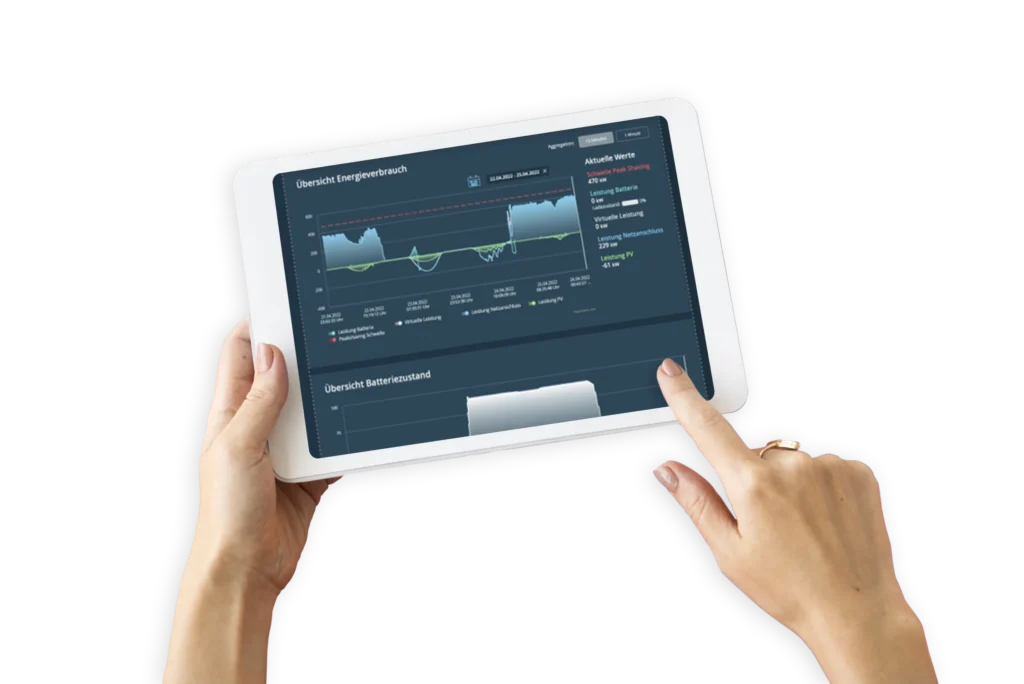

Redispatch 2.0 refers to a grid-side control instrument that enables grid operators to specifically intervene in the generation and consumption of electricity in order to avoid grid bottlenecks. Since October 2021, Redispatch 2.0 has been mandatory in Germany and significantly expands the previous redispatch process. For companies, plant operators and flexible consumers, Redispatch 2.0 plays a central role in the interaction of the electricity grid, market and flexibility.
Table of contents
ToggleDefinition of terms
Redispatch 2.0 is a legally regulated procedure in which grid operators start up or shut down power generation, electricity storage or controllable consumption plants in order to eliminate imminent or existing grid bottlenecks.
In contrast to the previous redispatch, Redispatch 2.0 includes not only conventional power plants, but also:
- renewable energy plants
- battery storage
- controllable loads
with.
Background and objective of Redispatch 2.0
The expansion of renewable energies and the increasing decentralization of electricity generation are leading to increasing demands on grid stability. Electricity is increasingly generated where it cannot be directly consumed or transported.
The goal of Redispatch 2.0 is to:
- proactively avoid grid bottlenecks
- guarantee security of supply
- make curtailments more efficient and fairer
- integrate renewable energies in a way that is as grid-supportive as possible
Functioning of Redispatch 2.0
Redispatch 2.0 is based on forward-looking grid planning. Grid operators analyze forecasts for:
- electricity generation
- electricity consumption
- grid load
If a bottleneck is expected, the grid operator orders measures:
- Reduction or increase of feed-in
- Adjustment of storage charging or discharging processes
- Control of flexible consumers
The affected plants receive financial compensation for the ordered deviation from the market schedule.
The financial compensation within the framework of Redispatch 2.0 is based on the principle of lost profit. Plant operators should be placed in an economically equivalent position as if they had been able to fulfill their originally planned market schedule, for example from the day-ahead market & spot market. The aim is to compensate for economic disadvantages caused by grid-related interventions and to maintain investment incentives for flexible plants.
Stakeholders
Several stakeholders are involved in the Redispatch 2.0 process:
- Transmission system operators & control zones
- Distribution network operators
- Plant operators
- Direct marketers
- Deployment managers
These stakeholders continuously exchange data on forecasts, schedules and grid situations.
Demarcation from the previous redispatch
The classic redispatch was limited to:
- large conventional power plants
- transmission grids
Redispatch 2.0 significantly expands the approach:
- Integration of decentralized plants
- Inclusion of renewable energies
- Integration of storage and controllable loads
- Uniform processes across all grid levels
This makes Redispatch 2.0 a central instrument of the grid-oriented energy transition.
Impact on the electricity market and grid operation
Redispatch 2.0 influences both grid operation and the electricity market:
- Market schedules can be adjusted due to grid conditions
- Stock market prices from the day-ahead market & spot market remain in place, but are technically superimposed
- Grid stability takes precedence over market optimization
Thus, Redispatch 2.0 complements market-based mechanisms such as the merit order principle with grid-side control.
Relevance for companies
Redispatch 2.0 is relevant for companies if they:
- operate their own generation plants
- use battery storage
- use controllable consumers
Affected companies must:
- provide forecast and master data
- enable controllability
- technically implement redispatch measures
At the same time, new requirements are emerging for energy management systems (EMS) and energy monitoring & KPIs (EnPI).
Relationship with energy storage and flexibility
Energy storage devices play an increasingly important role in Redispatch 2.0:
- Storage devices can be specifically charged or discharged
- Grid bottlenecks can be locally compensated
- Flexibility can be used in a grid-supportive manner
This means that Redispatch 2.0 is closely related to:
- Grid-supportive storage control
- Load shifting through storage
- Demand Side Management (DSM)
- Decentralized grid control with AI
Distinction from related terms
Not to be confused with:
- Control energy: short-term compensation of frequency deviations
- Secondary control power (SRL) and tertiary control power (TRL): sub-markets of control energy
- Congestion management in the power grid: overarching term for measures to ensure grid stability
- Grid fees and levies: price components independent of redispatch
- Capacity market vs. energy market: market mechanisms for security of supply
Summary
Redispatch 2.0 is a legally regulated procedure with which grid operators intervene in feed-in, storage or consumption in order to avoid grid bottlenecks and guarantee security of supply. In contrast to the earlier redispatch, Redispatch 2.0 includes not only conventional power plants but also renewable plants, battery storage and controllable loads across all grid levels, requiring a continuous data exchange between grid operators, direct marketers and other responsible parties. Market schedules can be adjusted for grid reasons, while stock market mechanisms such as day-ahead trading remain in place, but are technically superimposed by grid-side interventions. For companies with generation plants, storage or flexibility options, this results in a higher relevance of forecasts, controllability and digital systems such as energy management and monitoring, with energy storage and grid-supportive control playing an increasingly important role as instruments for local bottleneck relief.
Note: Please note that this wiki entry on intensive grid use is for informational purposes only and does not constitute legal advice. be.storaged GmbH assumes no guarantee for the completeness, accuracy and timeliness of the information in this entry.