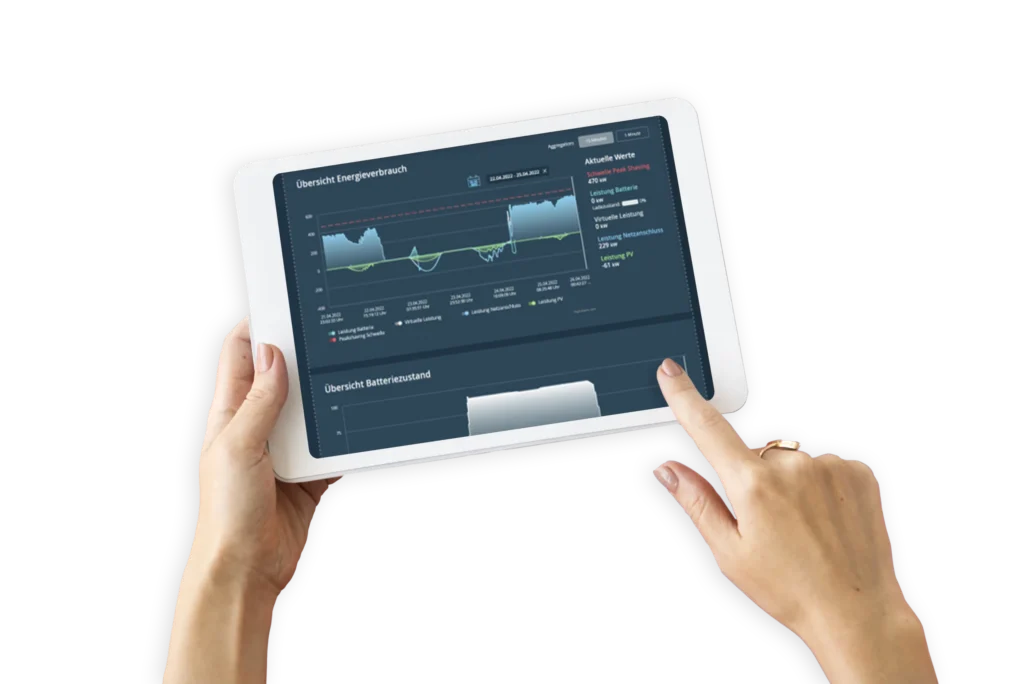

Peak load curtailment refers to the targeted reduction of electricity peaks in businesses that experience a significant increase in electricity consumption at certain times. These peaks, also known as peak loads, not only affect grid stability but also lead to higher costs.
Table of contents
ToggleBattery storage systems handle peak demand
Battery storage systems play a central role in peak load shaving. These systems make it possible to control the power draw from equipment and machinery so that, during peak loads, the required energy is drawn from the battery storage rather than from the grid. This helps avoid costly peak loads. This method is also known as peak shaving .
High energy consumption and unpredictable production processes
High Energy Demand: Short-term spikes in electricity consumption are particularly common in the manufacturing industry.
Unpredictable production processes: Starting up machines or systems can lead to sudden load increases.
Higher Power Price and Risk of Grid Overload
Rising Energy Costs: Companies must expect higher electricity bills because energy providers charge a peak-load rate during periods of high demand.
Grid overload: Frequent peak loads can endanger the stability of the power grid.
Physical Capping and the 15-Minute Rule in the RLM
Physical peak load shaving: Battery storage is used here to compensate for the power demand during peak loads by means of temporarily stored energy.
Peak Load Capping with Recorded Load Profile (RLM): Electricity consumption is dynamically balanced by ensuring that peak loads do not exceed a predefined threshold within 15-minute intervals. This also applies to commercial storage systems .
Cost reduction, efficiency, and faster payback
Cost reduction: Companies can save significantly on their grid charges by avoiding an expensive capacity price.
Improved efficiency: Better control of energy costs and a measurable reduction in CO2 emissions.
Faster Payback: The use of battery storage systems enables more efficient use of storage capacity and thus a faster return on investment.
Conclusion: Cost Leverage and Contribution to Grid Stability
Peak load shaving is an effective method for counteracting the increased costs associated with peak loads. Through the strategic use of battery storage systems, companies can not only reduce their operating costs but also contribute to the stability of the power grid.
Frequently Asked Questions (FAQ)
What is peak load curtailment?
Peak load shaving refers to the targeted reduction of electricity peaks using battery storage systems to lower power-based grid fees.
How is load peak capping related to peak shaving?
Both terms describe the same principle—“Lastspitzenkappung” is the German term, and “Peak Shaving” is the English term.
How much can be saved by capping peak loads?
Businesses can save significantly on their electricity rates; the exact amount depends on their individual load profile.