
Direct marketing plays a central role in the energy market and enables renewable energy producers to sell their electricity directly on the exchange or via contracts with customers. This model offers both opportunities and challenges, particularly with regard to economic profitability and market integration. It is also closely linked to other concepts such as battery storage solutions, energy management systems and virtual power plants.
Table of contents
ToggleWhat is direct marketing?
Direct marketing refers to the sale of electricity from renewable energies directly on the electricity exchange or to energy traders or suppliers, instead of claiming the legally stipulated feed-in tariff according to the Renewable Energy Sources Act (EEG). It was introduced in 2012 with the market premium to promote better market integration of renewable energies. Marketing is becoming increasingly efficient via digital platforms and virtual power plants. It also plays a role in own consumption optimization by helping to use generated electricity in an economically optimal way.
Functioning of direct marketing
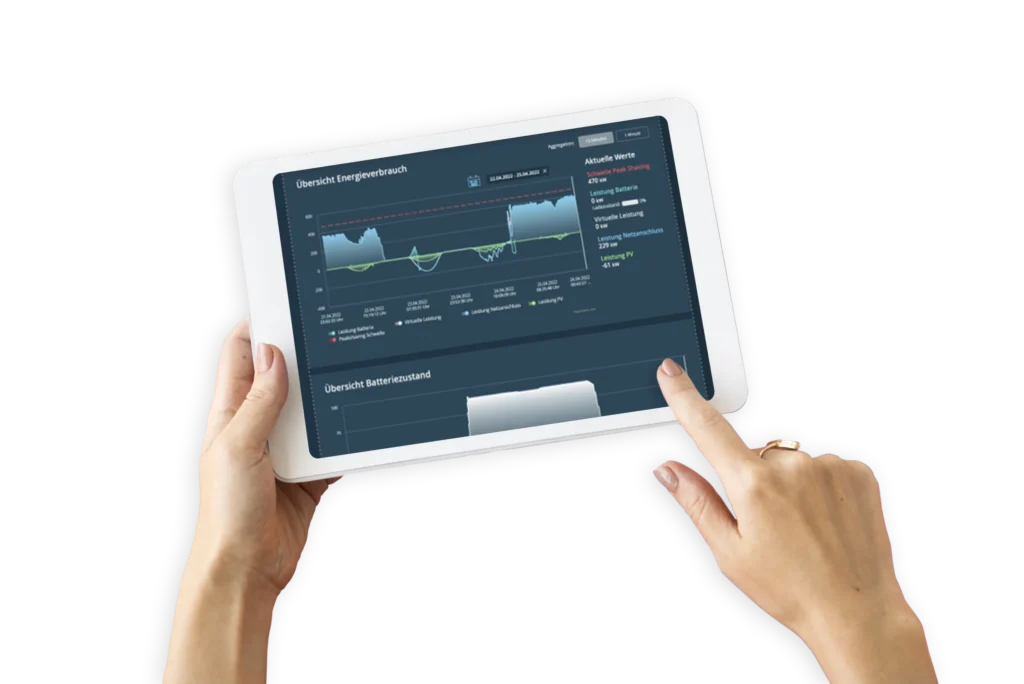
Electricity from renewable energies is no longer fed into the grid at fixed feed-in tariffs, but is actively marketed via electricity exchanges such as the EPEX Spot Intraday Market or through Power Purchase Agreements (PPAs). Direct marketers take over the trading and optimization of revenues. Modern battery storage solutions and energy management systems help to efficiently coordinate supply and demand and also enable peak shaving (peak shaving) to specifically avoid high consumption peaks.
Market premium model and revenues
In the market premium model, revenues consist of two main components. On the one hand, operators of renewable energy plants receive the market price, which reflects the average stock exchange price for their energy source. On the other hand, the grid operator pays a market premium, which together with the market price results in the amount of the legally stipulated value to be invested. This regulation ensures that operators receive a stable remuneration, while at the same time promoting the market integration of renewable energies.
A marketing fee is charged for the marketing service provided by a direct marketer, the amount of which depends on the energy source and the plant size. Individual pricing is possible and is often adapted to the specific needs of the plant operator.
Advantages and challenges in direct marketing
Advantages of direct marketing
- Higher market integration of renewable energies
- Additional revenue opportunities through flexible electricity marketing
- Promotion of more stable grid control
- Combination with battery storage to increase profitability
- Integration into energy management systems to optimize energy consumption
- Participation in the control reserve market (e.g. e.g. primary control reserve (PRL), secondary control power (SRL), tertiary control power (TRL), control energy market (RAM))
Challenges of direct marketing
- Volatility of the electricity market and price fluctuations
- Technical requirements for plants and control systems
- Necessity of an experienced direct marketer
- Regulatory requirements and adjustments
Future prospects
With increasing digitization and improved forecasting models, direct marketing will continue to gain in importance. Developments such as Power Purchase Agreements (PPAs), virtual power plants and battery storage solutions offer further opportunities for a more efficient use of renewable energies. Energy management systems and intelligent controls enable an even more precise and economical direct marketing. In addition, integration into the control energy market could continue to increase in order to tap additional sources of revenue.
Summary of direct marketing
Direct marketing is an important instrument for the market integration of renewable energies and offers both economic advantages and challenges. By combining it with modern technologies such as virtual power plants, battery storage and energy management systems, efficiency can be further increased. In addition, there are synergies with own consumption optimization and the control energy market. The market premium model ensures a stable remuneration and promotes the economic viability of renewable energies. Direct marketing will play a key role in the energy transition in the coming years.
Note: Please note that the Wiki entry on direct marketing is for information purposes only and does not replace legal advice. be.storaged GmbH assumes no guarantee for the completeness, accuracy and timeliness of the information in this entry.