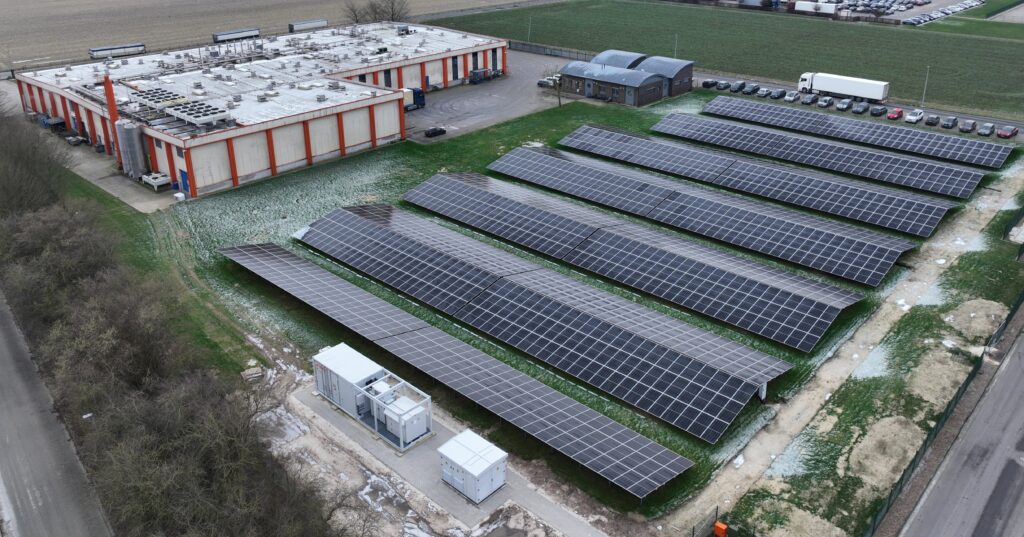

Thomas Riedel GmbH focuses on intelligent energy solutions with PV and battery storage
At be.storaged, we are proud to support Thomas Riedel GmbH’s major step towards energy efficiency and sustainability by implementing a state-of-the-art photovoltaic (PV) and battery storage system. The project, which is now fully operational, includes a 1 MWp solar plant with a battery capacity of 1.38 MWh, which optimizes energy consumption, reduces costs and increases self-sufficiency.
Intelligent energy management
The system is controlled by our advanced energy management platform okean, which offers the following advantages:
Maximizing self-consumption
The system maximizes on-site energy use by storing excess electricity in batteries and then using it when demand exceeds generation.
Reduction of energy costs
Our intelligent automation shifts energy consumption to times when electricity prices are lowest. The battery charges with cheap electricity and releases the stored energy when electricity prices rise.
Mastering demand peaks
okean helps to avoid expensive demand peaks through strategic energy distribution, thereby reducing costs.
Project implementation and collaboration
This project was realized in close cooperation with EWE Vertrieb and be.storaged, with EWE Vertrieb carrying out the PV installation and us providing the battery supply and system integration. With the complete connection of the system to the factory grid, Thomas Riedel GmbH is now independent of fluctuating energy prices and can simultaneously take advantage of favorable market conditions by selling excess electricity at favorable times.
Operational advantages and long-term effects
The combination of PV generation with battery storage and okean offers tangible benefits for Thomas Riedel GmbH.
Greater self-sufficiency
A significant portion of the plant’s energy needs is now covered by self-generated and stored electricity, reducing dependence on the grid.
Reduction of energy costs
Intelligent energy management enables cost savings through the use of dynamic prices and the minimization of peak loads.
More sustainability
The plant reduces its own CO2 footprint through the optimal use of renewable energies and the reduction of dependence on electricity from fossil fuels